Pool Deck Pavers in Bakersfield, CA
Bakersfield Keystone Tile & Pavers specializes in premium pool deck paver installations throughout Bakersfield, CA. Over time, standard pool concrete inevitably cracks and settles, creating dangerous tripping hazards. We replace degrading surfaces with structurally sound, Heat-Resistant Tile Systems and natural stone tailored for the Central Valley's aggressive summer temperatures.
Pool Deck Safety, Drainage, and Surface Design
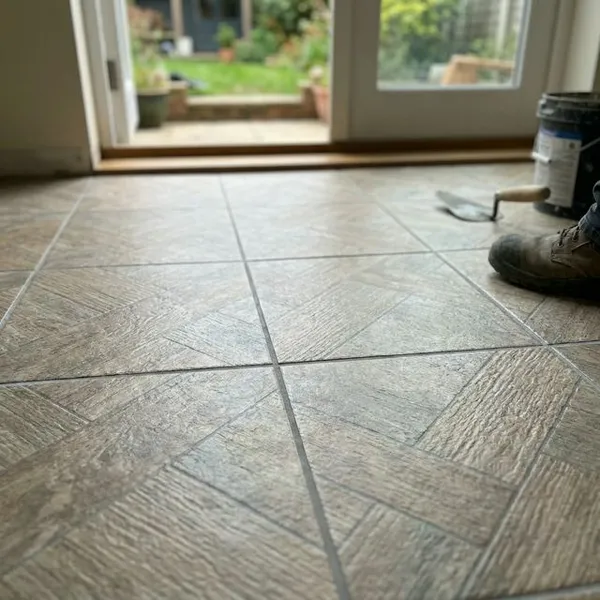
Pool areas must balance visual luxury with critical safety requirements. Aesthetically stunning materials are useless if they become dangerously slick when wet or scorch bare feet in August. We prioritize functionality by relying on Anti-Slip Safety Texturing paired with our proprietary Dust-Sealed Installation Process for remodeling occupied backyards.
We highly recommend Natural Travertine for pool decks in Kern County. Travertine naturally lacks the metallic elements that absorb solar radiation, allowing it to remain significantly cooler than standard concrete. Furthermore, its porous texture grants superior traction when wet. We complement every pool surround installation with our Water-Smart Drainage Design, effectively sloping water away from the pool edge to prevent subsurface foundation erosion.
- Travertine and Limestone for thermal comfort
- Seamless integration with existing pool coping
- Subsurface drainage channel placement
- Anti-slip surface texture rated for wet pool environments
Pool Deck Paver Materials for Kern County Conditions
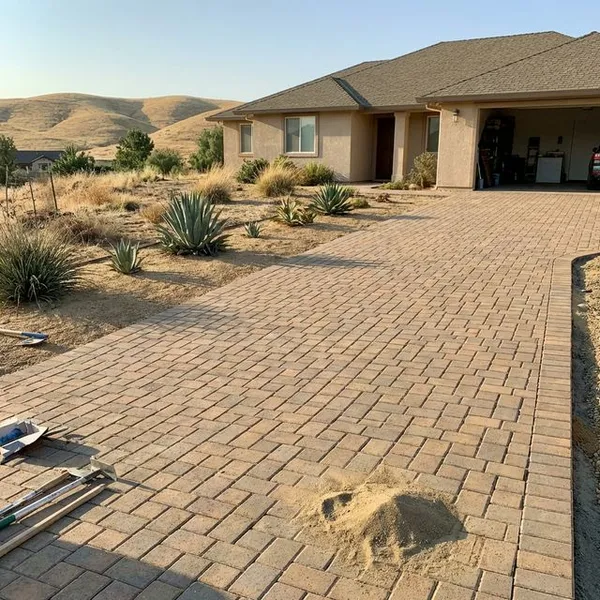
Not all paving materials perform equally around a swimming pool. We select and specify materials based on thermal performance, chlorine resistance, slip ratings, and long-term durability in Bakersfield's demanding climate.
Natural Travertine Pavers
Our most-recommended pool deck material for Bakersfield homeowners. Travertine's natural mineral composition reflects heat rather than absorbing it, keeping surface temperatures dramatically lower than concrete or porcelain on 105°F+ days. The naturally pitted surface texture provides built-in traction without any anti-slip coating.
Requires annual sealing. Available in ivory, walnut, and noce tones.
Textured Outdoor Porcelain Pavers
Unglazed, textured outdoor porcelain pavers rated for pool environments offer a zero-maintenance alternative to natural stone. They resist chlorine, UV fading, and staining without periodic sealing. Available in large-format sizes that create a contemporary, resort-style aesthetic.
No sealing required. High R11 slip resistance rating for wet areas.
Interlocking Concrete Pavers
Light-colored concrete pavers in tumbled or brushed finishes provide an affordable pool deck solution that still outperforms monolithic poured concrete. The modular format allows individual paver replacement if a unit chips or stains — eliminating costly full-deck demolition for localized damage.
Seal every 2–3 years. Wide color and pattern selection.
Limestone and Bluestone
For clients seeking a more refined, upscale aesthetic, honed limestone and bluestone slabs create an elegant pool surround with a cool-toned palette. Both materials have excellent thermal performance comparable to travertine, and their dense composition resists pool chemical exposure well.
Requires sealing. Premium material cost with exceptional curb-appeal ROI.
Pool Deck Paver Installation Process
A pool deck paver project that fails — lifting, cracking, or draining improperly — is a safety hazard and an expensive problem. We follow a rigorous installation sequence to ensure your investment holds for decades.
Site Survey and Drainage Engineering
We begin with a precise survey of the pool surround, mapping existing grades, drainage outlets, and coping transitions. Proper slope engineering — typically 1/8" per foot away from the pool edge — is non-negotiable for preventing water from undermining your base or pooling against your home's foundation.
Demolition and Sub-base Excavation
Existing concrete or deteriorated decking is cut, broken out, and hauled from the site. We excavate to appropriate depth based on your selected paver thickness — typically 4"–6" of compacted Class II road base beneath a 1" leveling sand layer. This foundation depth prevents the soft soil settlement that causes paver shifting.
Paver Layout and Precision Cutting
Pavers are dry-set over the leveling sand starting from the pool coping edge outward, maintaining consistent joint spacing. Wet-saw cutting ensures precise fits around steps, equipment pads, and curved pool shapes. Every paver is checked for level and alignment before we proceed to the next row.
Polymeric Sand Jointing and Compaction
Polymeric sand is swept into all joints and activated with water, bonding into a solid, weed-resistant, insect-resistant compound. A plate compactor vibrates the entire surface to finalize seating and ensure uniform height across the deck. Any pavers that shift during compaction are releveled immediately.
Sealing and Final Inspection
Natural stone installations receive a penetrating sealer application to protect against chlorine staining and moisture intrusion. We perform a final drainage test, walking the entire perimeter to confirm correct slope and confirm no standing water points remain before handing the project over.
Frequently Asked Questions
How soon after installation can we use the pool and deck area?
For concrete paver installations, the deck is typically ready for foot traffic within 24–48 hours once the polymeric sand has fully cured. Natural stone installations sealed with penetrating sealer require 48–72 hours before water exposure. We provide specific cure-time instructions for every project based on the material and current weather conditions.
Does travertine really stay cooler than concrete around pools?
Yes — and the difference is significant in Bakersfield's summers. Travertine reflects solar radiation rather than absorbing it due to its mineral composition and natural porosity. On a 105°F day, travertine surface temperature can be 20–30°F cooler than comparable gray concrete. This makes it one of the most practical choices for barefoot pool use in Kern County.
Do pool deck pavers need to be sealed, and how often?
It depends on the material. Natural travertine, limestone, and bluestone require sealing every 1–2 years to protect against chlorine and pool chemical staining. Concrete pavers benefit from sealing every 2–3 years to lock joint sand and enhance color. Porcelain pavers require zero sealing — ever. We discuss the maintenance requirements for your chosen material during the estimate so you can factor it into your decision.
Can you install pavers around our existing pool without draining it?
Yes, in most cases. Pool deck paver installation is a dry-set process that takes place on the surround area, not inside the pool. The pool does not need to be drained. We take precautions during demolition and excavation to prevent debris from entering the pool water, and we coordinate our work schedule to minimize disruption to pool access during the project.
Modernize Your Pool Deck This Season
Eliminate dangerous concrete and upgrade to heat-resistant, slip-safe pavers. Contact us today for a free pool deck estimate in Bakersfield.